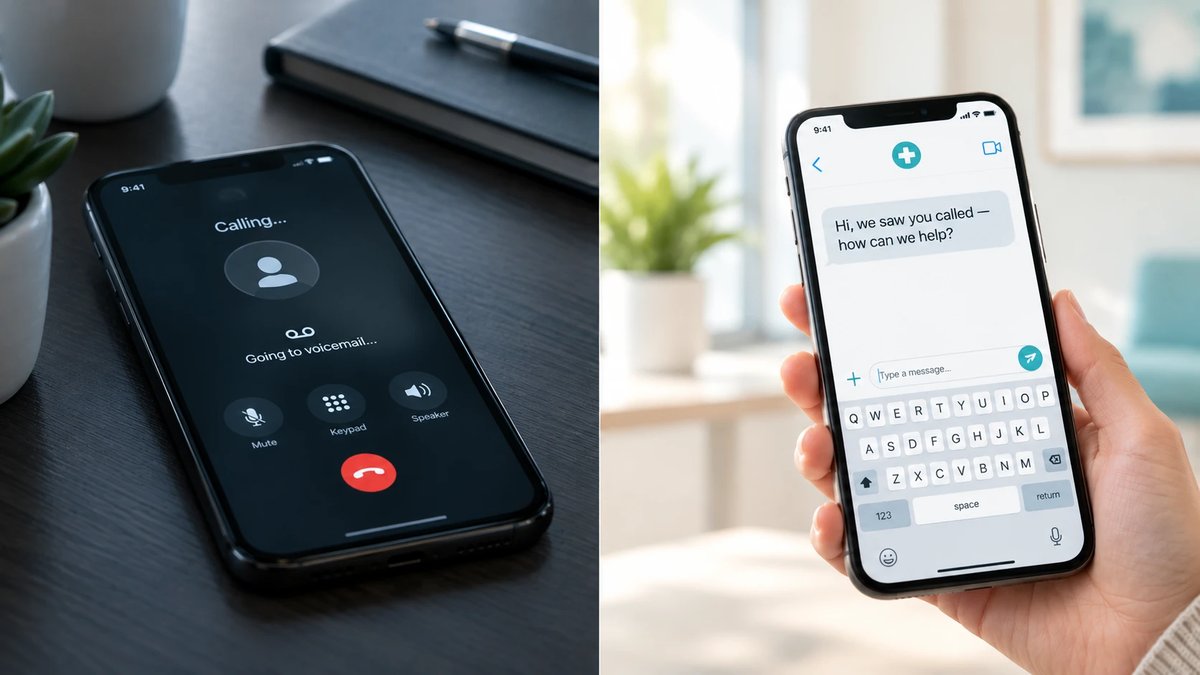
83% of leads never get a same-day response. The practices that respond in under 5 minutes convert at 15–25%. Missed-call text-back is supposed to fix this, but the way most aesthetic practices implement it, the message gets ignored almost as often as the missed call itself.
The problem isn't the concept. It's the execution. A generic "We missed your call! Call us back at your convenience" text does almost nothing. The patient already called you once and didn't get through. Asking them to try again isn't a follow-up. It's a shrug.
Why Generic Text-Back Messages Fail
Open your practice's phone system right now and look at the missed-call text it sends. If it says anything like "Sorry we missed your call, please call back during business hours" or "Thanks for calling [Practice Name]! We'll return your call shortly," you have a problem.
These messages fail for three reasons:
They don't acknowledge what the caller wanted. Someone calling a plastic surgery practice about a rhinoplasty consultation has a completely different mindset than an existing patient calling to reschedule their Botox. A single generic message treats both the same and connects with neither.
They don't invite a reply. "We'll call you back" puts the ball in your court, not theirs. But your coordinator is already on the phone with someone else, which is why the call was missed in the first place. The patient waits. Time passes. They call somewhere else.
They sound automated. And they are. The patient knows they got an auto-response. That's fine for confirming an appointment, but when someone is reaching out for the first time about a procedure they've been thinking about for months, an obviously templated reply signals that they're a number, not a priority.
The Three Callers You're Missing
Not every missed call is the same, and the text-back shouldn't be either. In an aesthetic or dental practice, missed calls generally fall into three buckets:
New patient inquiry. They found you on Google, Instagram, or a friend's recommendation. This is their first contact with your practice. They're shopping, comparing, and probably calling 2-3 other offices. This caller has the shortest patience and the highest revenue potential.
Existing patient rescheduling. They're already your patient. They need to move an appointment, or they're overdue for a treatment and finally getting around to calling. These callers are loyal but busy, and if they don't get through now, they'll push it off for another two weeks.
Pricing question. They know what they want but not what it costs. Maybe they're comparing quotes. Maybe they've been saving and want to know if they're in the right ballpark. This caller needs a number, not a pitch, not a "schedule a consultation to discuss pricing."
Each of these callers needs a different first text. Here's what that looks like.
A 3-Message Sequence That Works
The best missed-call text-back isn't one message. It's a short sequence. Three messages over 48 hours, each with a specific purpose. Here's the framework for a new patient inquiry at an aesthetic practice:
Message 1: Immediate (within 60 seconds of missed call)
"Hi [name], this is [Practice Name], sorry we missed your call! Were you reaching out about a specific treatment, or did you have a question we can help with over text?"
This message does three things: acknowledges the miss, identifies itself, and asks an open-ended question that invites a text reply. It moves the conversation to text (where most patients under 55 prefer to communicate anyway) and it gives the coordinator something to work with when they follow up.
Message 2: 4 hours later (if no reply)
"Just wanted to make sure this didn't slip through. We'd love to help with whatever you were calling about. If it's easier, you can text us back here and we'll get you an answer."
Short, warm, low-pressure. The key phrase is "text us back here" because it reaffirms that they don't need to call again. Many patients are calling during a break at work, from a waiting room, or while driving. They can't call back right now. But they can text back in 30 seconds.
Message 3: 24-48 hours later (if still no reply)
"Hi [name], we know things get busy. If you were calling about [most common procedure category], we're booking consultations through [timeframe]. Just reply here and we'll hold a spot for you."
This message does something the first two didn't: it gives specific information. A timeframe. A procedure mention. Something concrete that turns the conversation from "call us back" to "here's what's available." It also creates mild urgency without being pushy. "We're booking through November" is factual, not salesy.
How the Sequence Changes by Caller Type
For existing patients rescheduling: The first message can be more direct and familiar. "Hey [name]! Sorry we missed you! Were you calling to reschedule, or is there something else we can help with?" No need for a 3-message sequence here. One text plus a same-day callback is usually enough, because the relationship already exists.
For pricing questions: The worst thing you can do is dodge the price. "We'd be happy to discuss pricing during a consultation" is code for "we won't tell you," and the patient knows it. Instead: "Hi [name]! Most [procedure] treatments at our practice run between [$X–$Y] depending on the specifics. Want us to set up a quick consultation so we can give you an exact number?" Give the range. Earn the consult.
For dental implant practices: The tone shifts. Dental implant patients aren't browsing the way aesthetic patients are. They've usually been dealing with a missing or failing tooth for months. The text-back should acknowledge urgency: "Hi [name], sorry we missed you. If you're calling about implants or a restoration, we can usually get you in for a consultation within the week. Want us to find a time?"
The After-Hours Problem
Everything above assumes the call comes in during business hours. After hours is where most practices completely fall apart.
At one medspa location we analyzed, the weekend first-response time averaged 45.2 hours. Within-the-hour responses on weekends? Zero percent. The patient who called Saturday afternoon at 2 PM didn't hear back until Monday at 11 AM. By then, they'd already had a consult at the practice down the road that texted them back in 3 minutes.
Weeknight leads weren't much better: one office's median first response on weeknight inquiries was 13.1 hours. A call that came in at 6:30 PM got answered at 7:30 the next morning, if it got answered at all.
The fix isn't complicated. The same text-back sequence works after hours, with one adjustment to Message 1:
"Hi [name], this is [Practice Name]. We're closed for the evening but didn't want your call to go unanswered. Were you calling about a treatment or procedure? Text us back here and we'll have one of our coordinators reach out first thing in the morning."
That single text does something no voicemail box does: it tells the patient they were noticed, it opens a text conversation, and it sets expectations for when they'll hear back. Compare that to their phone ringing, going to voicemail, and hearing "Our office hours are Monday through Friday, 8 AM to 5 PM." That voicemail is a goodbye, not a follow-up.
What Your Coordinator Sees the Next Morning
When this works right, your coordinator doesn't start the day with a list of missed calls to return. They start with a list of text conversations already in progress.
"Sarah texted back at 9 PM last night, asking about lip filler pricing." "Marcus replied this morning. He wants to reschedule his follow-up." "Jessica sent three messages. She's interested in a tummy tuck and wants to know about financing."
Each of those is a warm conversation, not a cold callback. The coordinator already knows what the patient wants. The patient already feels heard. The first call of the day is productive, not a detective hunt through the call log trying to figure out who called yesterday and why.
That's the difference between a missed-call text that works and one that doesn't. The bad version tells the patient you'll get back to them. The good version starts the conversation immediately, even if the full conversation happens the next day.
Frequently Asked Questions
What should a missed-call text-back message say for an aesthetic practice?
The best missed-call text-back messages are short, specific, and end with a question. Instead of "We missed your call, please call us back," try: "Hi [name], sorry we missed you! Were you calling about scheduling a treatment or did you have a question we can help with over text?" The question keeps the conversation going via text, which most patients prefer to another phone attempt. Avoid generic messages. They read as automated and get ignored.
How quickly should a missed-call text go out?
Within 60 seconds of the missed call. The caller just had your practice on their mind and their phone in their hand. A text that arrives while they're still looking at your number gets opened and replied to. A text that arrives 2 hours later competes with everything else in their day. During business hours, speed is about conversion. After hours (one medspa location averaged 45.2 hours for weekend first-response), it's about survival. The patient who called at 7 PM on Friday and doesn't hear back until Monday morning has already moved on.
Should the text-back sequence be different for aesthetic vs. dental practices?
Yes. Aesthetic patients are often browsing and comparing, and their missed call might be one of three practices they tried. The text-back should be warm, low-pressure, and invite them to share what procedure they're interested in. Dental implant patients are usually further along in their decision because they've been dealing with the problem for months or years. Their text-back should acknowledge urgency and offer a direct path to scheduling a consultation. The tone shifts from "let's explore what you're looking for" to "let's get you in so we can look at your options."